CCC Liner Plates are industrial wear-protection components used to protect equipment surfaces exposed to abrasion, friction and material impact. They are selected for applications where conventional steel liners may experience rapid wear because of continuous contact with abrasive materials. Depending on the product design, CCC liner plates may use a composite construction that combines a wear-resistant surface with a supporting metal plate to provide a balance of durability, structural strength and service life.
These liner plates can be considered for material handling systems, mining equipment, cement plants, mineral processing facilities, steel production units and other heavy industrial operations. Their suitability depends on the material being handled, particle size, impact intensity, operating temperature and installation conditions. Buyers should confirm the exact meaning of CCC in the supplier's product specification because the abbreviation can vary between manufacturers and product ranges.
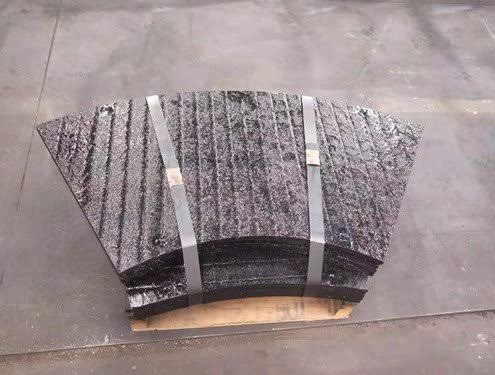
CCC Liner Plates, CCC Liner Plates Manufacturers, CCC Liner Plates Suppliers, CCC Liner Plates Stockists, CCC Liner Plates Exporters
CCC Liner Plates are protective plates designed to reduce wear on equipment surfaces that handle, transfer or process abrasive materials. They can be manufactured in different thicknesses, dimensions and configurations according to the equipment design and operating requirements. Depending on the specified construction, the wear-resistant layer may be combined with a tougher backing plate to support installation and withstand service loads.
The purpose of a liner plate is to absorb the wear that would otherwise affect the main equipment structure. By providing a replaceable protective surface, liners can help reduce damage to chutes, hoppers, bins, conveyors and processing equipment. The appropriate liner design should be selected according to the dominant wear mechanism, such as sliding abrasion, gouging abrasion, impact or a combination of these conditions.
One of the main benefits of CCC Liner Plates is their ability to provide a protective barrier between abrasive materials and the equipment structure. In suitable applications, this can help reduce surface loss, deformation and premature damage. Actual performance depends on the liner's composition, hardness, thickness and the conditions under which it operates.
Using an appropriate wear liner can help extend the interval between maintenance activities. When a liner is matched correctly to the application, it can reduce the frequency of repairs to the underlying equipment. Service life should be evaluated using operating history, wear measurements and the manufacturer's technical recommendations rather than relying on a fixed lifespan.
Wear liners provide a sacrificial surface that can be inspected and replaced as necessary. This may help maintenance teams plan repairs before excessive wear damages the equipment body. The overall benefit depends on access for inspection, liner replacement time, availability of replacement parts and the effectiveness of the maintenance schedule.
CCC Liner Plates may be suitable for demanding environments where materials such as ores, clinker, coal, minerals, aggregates and other bulk solids move through industrial systems. The liner must be selected for the specific combination of impact, abrasion, temperature and chemical exposure present in the process.
CCC Liner Plates in India, CCC Liner Plates Manufacturers in India, CCC Liner Plates Suppliers in India, CCC Liner Plates Stockists in India, CCC Liner Plates Exporters in India
Mining and mineral processing equipment often handles hard, irregular particles that can cause substantial wear. Suitable liner plates can protect transfer chutes, hoppers, bins, crushers and material distribution systems. Selection should account for ore characteristics, particle size, drop height, impact energy and the direction of material flow.
Cement plants process abrasive materials such as limestone, clinker, raw meal and other mineral products. Depending on the operating conditions, wear liners may be installed in chutes, storage systems, transfer points and material handling equipment. Temperature limits and the type of abrasion should be assessed before selecting a liner for a cement production application.
Steel plants and metal processing facilities may use wear liners in bulk material handling systems that transfer ores, coke, sinter, slag-related materials and other industrial solids. The correct liner helps protect equipment from surface wear, while the mounting method must be compatible with the equipment design and operating environment.
Power generation facilities that handle coal, ash, minerals or other bulk materials may require abrasion-resistant protection in conveyors, hoppers, chutes and transfer points. The liner specification should consider particle characteristics, operating temperature, moisture, material flow and any relevant safety requirements.
Bulk material handling systems rely on chutes, bins, hoppers and transfer equipment to move materials efficiently. CCC Liner Plates can be considered where sliding abrasion and material impact contribute to equipment wear. Correct placement and secure installation are important to avoid gaps, material trapping or premature liner failure.
CCC Liner Plates can be specified according to the requirements of the equipment and the material being processed. Exact material composition, hardness, dimensions and performance values must be confirmed with the manufacturer. The following table provides a general purchasing checklist rather than guaranteed product values.
|
Product Name |
CCC Liner Plates |
|---|---|
|
Product Type |
Industrial wear-protection liner plates |
|
Construction |
As per the approved product design and manufacturer specification |
|
Base Material |
As per customer requirement and product design |
|
Wear Layer |
As per the selected grade and manufacturer specification |
|
Plate Thickness |
As per customer requirement |
|
Plate Dimensions |
As per customer requirement and equipment drawing |
|
Hardness |
As per the specified wear material and test method |
|
Surface Finish |
As per product design and application requirements |
|
Mounting Method |
Bolting, welding or another approved method, as applicable to the design |
|
Applications |
Mining, cement, steel, power generation and bulk material handling |
|
Inspection and Testing |
As per purchase order, agreed inspection plan and applicable specifications |
|
Availability |
Subject to confirmation by the supplier |
Selecting the right liner requires an understanding of the operating environment and the type of wear affecting the equipment. A plate that performs well in a low-impact sliding-abrasion application may not be appropriate for equipment exposed to repeated heavy impacts. The selection process should consider both the wear-resistant surface and the supporting structure.
Correct installation is essential for achieving reliable liner performance. Before installation, the equipment surface should be inspected, and the mounting points should be checked against the approved drawings. Plates must be positioned securely without creating gaps or protrusions that could obstruct material flow or cause localised wear.
Welding, drilling, cutting and other installation operations should follow the manufacturer's instructions. Some wear-resistant materials or composite constructions may require specific procedures to prevent damage to the wear layer or backing material. Welding should not be performed unless it is permitted for the particular product and substrate.
Routine maintenance should include visual inspection, wear-thickness checks where practical, examination of fasteners and welds, and monitoring for cracking, distortion or loose sections. Worn or damaged plates should be replaced according to the maintenance plan and safety procedures. Equipment must be isolated and made safe before inspection or replacement work begins.
Conventional steel liners can offer useful toughness and are often selected for general-purpose protection. However, their performance may be limited in applications with severe abrasion. Specialised composite or wear-resistant liners may provide improved resistance to particular wear mechanisms, depending on their composition and construction.
The best option depends on operating conditions rather than material hardness alone. A very hard wear surface may perform well under sliding abrasion but may not be the best choice where severe impact or structural deformation is the main concern. Buyers should compare expected wear life, installation requirements, maintenance intervals, total replacement costs and compatibility with the equipment.
When sourcing CCC Liner Plates, buyers should look for a supplier that can understand the application, confirm product details and support specification-based purchasing. Hard-Tuff can be approached for product information and assistance with identifying liner requirements. Before placing an order, confirm the exact product construction, available sizes, technical data and suitability for the intended operating conditions.
CCC Liner Plates are considered for industrial equipment that requires protection against abrasion and material impact. Their effectiveness depends on the specified wear material, supporting construction, operating environment and installation method. By evaluating the wear mechanism, confirming technical specifications and following an appropriate inspection programme, industrial operators can make more informed decisions about liner selection and maintenance. Contact Hard-Tuff to discuss the required product details, dimensions and application conditions before confirming an order.
