Fe-Cr-C Overlay Plates are wear-resistant steel plates designed to protect industrial equipment from severe abrasion and material erosion. Fe-Cr-C refers to an iron-chromium-carbon alloy system commonly used in hardfacing applications. The chromium and carbon content helps form hard chromium carbides within the wear-resistant layer, improving resistance to abrasive wear in demanding industrial environments.
Hard-Tuff provides wear-resistant solutions for industries that handle abrasive materials and operate heavy-duty processing equipment. Fe-Cr-C Overlay Plates are commonly considered for applications involving mining, cement production, steel manufacturing, power generation, mineral processing, and bulk material handling. Selecting the correct overlay plate depends on the abrasive material, impact conditions, operating temperature, plate thickness, and equipment design.
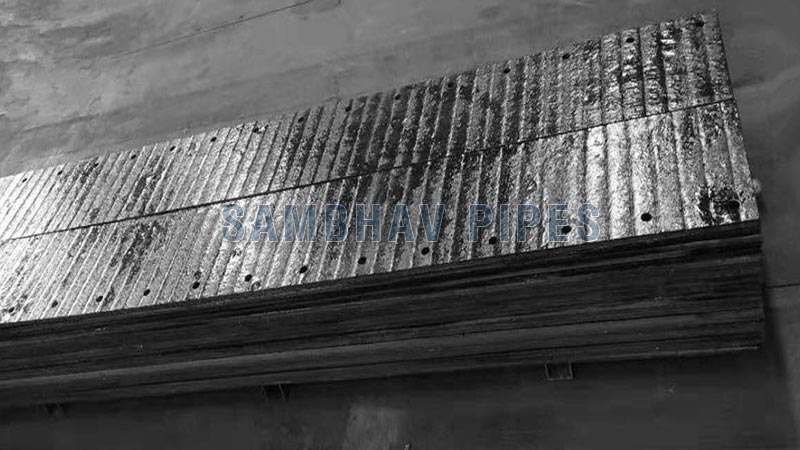
Fe-Cr-C Overlay Plates, Fe-Cr-C Overlay Plates Manufacturers, Fe-Cr-C Overlay Plates Suppliers, Fe-Cr-C Overlay Plates Stockists, Fe-Cr-C Overlay Plates Exporters
Fe-Cr-C Overlay Plates are composite wear plates consisting of a steel base plate and a hardfacing layer containing iron, chromium, and carbon. The wear-resistant layer is typically applied using a hardfacing process that deposits an alloy onto the base material. During solidification, chromium-rich carbides can form within the overlay, providing a hard surface that resists abrasion.
The steel base provides structural support and helps the plate be installed into industrial equipment, while the overlay protects the working surface from wear. Depending on the manufacturing process and product design, these plates may be supplied in different thicknesses, dimensions, overlay compositions, and surface conditions.
Fe-Cr-C Overlay Plates are especially useful in equipment exposed to sliding abrasion, material flow, and repeated contact with hard particles. However, their suitability for severe impact, elevated temperatures, or corrosive environments depends on the specific alloy composition and plate construction. Technical specifications should always be checked before selecting a plate for a critical application.
Fe-Cr-C Overlay Plates are selected for their combination of surface hardness, abrasion resistance, and structural support. Their actual performance depends on the hardfacing alloy, carbide distribution, dilution, overlay thickness, and manufacturing quality.
Fe-Cr-C Overlay Plates in India, Fe-Cr-C Overlay Plates Manufacturers in India, Fe-Cr-C Overlay Plates Suppliers in India, Fe-Cr-C Overlay Plates Stockists in India, Fe-Cr-C Overlay Plates Exporters in India
The primary advantage of Fe-Cr-C Overlay Plates is their ability to resist abrasion in industrial environments. Chromium-rich carbides within the hardfacing layer help protect the surface against wear caused by hard particles moving across the plate. This characteristic makes these plates useful in equipment that processes abrasive minerals, coal, limestone, clinker, and similar materials.
Industrial equipment operating under continuous abrasive conditions may require frequent repairs or liner replacements. Installing suitable Fe-Cr-C Overlay Plates can help reduce the rate of surface deterioration and extend maintenance intervals. The resulting maintenance savings depend on the application, operating conditions, installation quality, and actual wear rate.
Unplanned equipment shutdowns caused by worn components can affect production schedules and operating costs. Wear-resistant overlay plates help protect critical surfaces and may support more predictable maintenance planning. Regular inspections remain important to identify cracks, localized wear, loose fasteners, or other conditions that could affect safe operation.
Depending on the plate design and equipment requirements, Fe-Cr-C Overlay Plates can be fabricated or installed using suitable mechanical fixing systems. Cutting, drilling, welding, and bending must follow the manufacturer's recommendations because the hardfacing layer can behave differently from the base steel. Appropriate fabrication procedures help maintain the integrity of the wear-resistant surface.
Although overlay plates may involve a higher initial purchase cost than conventional steel plates, they can provide value in applications where abrasion causes frequent component replacement. Evaluating the total cost of ownership, including installation, downtime, maintenance, and replacement frequency, helps determine whether Fe-Cr-C Overlay Plates are a suitable investment.
Mining and mineral processing operations handle abrasive materials such as iron ore, copper ore, coal, and mineral concentrates. Fe-Cr-C Overlay Plates can be used to protect selected chutes, hoppers, transfer points, conveyor components, and screening equipment. The required plate design depends on particle size, material flow, impact severity, and the dominant wear mechanism.
Cement plants process limestone, clinker, gypsum, coal, and other abrasive raw materials. Fe-Cr-C Overlay Plates may be installed in suitable material transfer systems, storage hoppers, chutes, and processing equipment to limit abrasion. Applications involving high temperatures or significant impact require careful evaluation of the plate's temperature capability and mechanical properties.
Steel plants and metal processing facilities use heavy-duty equipment to transport and process raw materials, slag, scrap, and other industrial substances. Fe-Cr-C Overlay Plates can help protect selected equipment surfaces exposed to abrasive contact. Where thermal cycling, heavy impact, or unusual operating conditions occur, the selected overlay composition and base material should be reviewed carefully.
Power generation plants may handle coal, ash, limestone, and other abrasive materials through conveyors, hoppers, transfer chutes, and related systems. Fe-Cr-C Overlay Plates can provide wear protection in suitable locations where continuous material movement causes surface deterioration. The plate specification should match the operating temperature, material characteristics, and installation conditions.
Bulk material handling equipment often experiences abrasion at transfer points, loading zones, discharge areas, and material flow channels. Fe-Cr-C Overlay Plates can help protect high-wear areas in these systems. Correct sizing, secure installation, and appropriate plate positioning are important for maintaining reliable performance and minimizing material buildup or uneven wear.
Industrial facilities that process aggregates, minerals, powders, and other abrasive materials may use overlay plates to protect machinery and material-contact surfaces. Suitable applications can include selected liners, feeders, bins, chutes, and hoppers. Engineering assessment is recommended where the equipment is exposed to combined abrasion, impact, heat, or corrosive conditions.
Choosing the correct Fe-Cr-C Overlay Plates requires an assessment of the operating environment, abrasive material, equipment configuration, and maintenance objectives. The plate should be selected based on the actual wear mechanism rather than hardness alone. A technically suitable overlay can improve wear performance while reducing the risk of premature damage or unnecessary replacement.
Fe-Cr-C Overlay Plates differ from conventional abrasion-resistant steel plates in their construction and wear mechanism. Conventional wear-resistant steel plates generally use a hardened steel composition throughout the plate thickness. Fe-Cr-C Overlay Plates combine a steel base with a separate hardfacing layer containing chromium carbides, creating a composite structure designed to provide a hard working surface supported by the base plate.
Conventional abrasion-resistant steel may be appropriate where balanced hardness, toughness, and fabrication properties are important. Fe-Cr-C Overlay Plates are often considered where severe abrasion causes rapid material loss and a carbide-rich surface is beneficial. However, the best option depends on impact severity, operating temperature, corrosion exposure, plate geometry, installation requirements, and overall cost.
Chromium carbide overlay plates are not automatically suitable for every wear application. High-impact environments may require a different material or a specially engineered composite design. Comparing technical datasheets and the actual operating conditions helps determine the most suitable wear protection.
Proper installation is essential for the performance of Fe-Cr-C Overlay Plates. The mounting surface should be prepared according to the manufacturer's instructions, and the plate should be secured using an approved method. Welding and thermal cutting must be carried out with suitable procedures because the hardfacing layer and steel base may respond differently to heat.
Routine inspection helps identify wear-through, cracking, loose fasteners, damage near plate edges, and uneven material flow. Worn plates should be assessed before the overlay is completely consumed, especially where continued operation could damage the underlying equipment. Maintenance intervals should be based on operating history, inspection results, and the severity of the application.
Hard-Tuff focuses on wear-resistant solutions for industrial environments where abrasion can affect equipment reliability, maintenance requirements, and production efficiency. Selecting a suitable overlay plate requires matching the material construction and wear characteristics to the specific application.
When evaluating Fe-Cr-C Overlay Plates, customers should confirm product availability, plate dimensions, overlay thickness, hardness documentation, base material details, and fabrication recommendations. Sharing information about the equipment, material being handled, operating temperature, and wear conditions can help identify an appropriate product solution.
Fe-Cr-C Overlay Plate specifications vary according to the base material, hardfacing alloy, manufacturing method, and intended application. The following table provides general specification categories. Exact chemical composition, hardness, dimensions, tolerances, and mechanical properties should be confirmed through the manufacturer's technical datasheet and product documentation.
|
Product Name |
Fe-Cr-C Overlay Plates |
|---|---|
|
Material System |
Iron-Chromium-Carbon Hardfacing Alloy on a Steel Base Plate |
|
Product Type |
Composite Wear-Resistant Overlay Plate |
|
Base Material |
As Per Manufacturer's Product Design and Customer Requirements |
|
Overlay Composition |
Iron, Chromium, Carbon, and Other Alloying Elements Depending on Grade |
|
Wear Mechanism |
Primarily Abrasive Wear; Impact Suitability Depends on Plate Design |
|
Overlay Hardness |
Grade-Dependent; Confirm the Hardness Scale and Test Method in the Technical Datasheet |
|
Total Plate Thickness |
As Per Product Availability and Customer Requirements |
|
Overlay Thickness |
As Per Selected Grade and Manufacturing Specification |
|
Length and Width |
Standard or Custom Dimensions, Subject to Availability |
|
Surface Condition |
As Supplied or Specified for the Selected Product |
|
Fabrication |
Cutting, Drilling, Welding, or Forming Only as Permitted by the Manufacturer's Guidelines |
|
Installation Method |
Suitable Welding or Mechanical Fixing Method Based on the Equipment Design |
|
Applications |
Mining, Cement, Steel Processing, Power Generation, Mineral Processing, and Bulk Material Handling |
|
Customization |
Subject to Technical Requirements and Manufacturing Capability |
Selecting the correct carbide wear plate requires an understanding of the material being processed, equipment design, and operating environment. A plate that performs well under sliding abrasion may not be suitable for severe impact or thermal cycling. Reviewing the main operating factors helps ensure the selected wear protection meets the application's requirements.
Fe-Cr-C Overlay Plates are not a single, uniform product category. Their characteristics depend on whether they are manufactured from solid carbide, produced as composite components, or supplied as steel plates with carbide-rich hardfacing. Other wear-resistant plate options may include abrasion-resistant steel plates and chromium carbide overlay plates. Each product type serves different combinations of abrasion, impact, fabrication, and cost requirements.
Abrasion-resistant steel plates may be suitable where a balance of hardness, toughness, and fabrication properties is required. Chromium carbide overlay plates are commonly selected for severe sliding abrasion and may feature a hardfacing layer deposited on a steel base plate. Tungsten carbide materials can provide very high hardness in suitable applications, but their use depends on component design, impact conditions, and cost considerations.
Before choosing between these options, compare the expected wear mechanism, available dimensions, installation method, operating temperature, repair requirements, and total service cost. A technical review with the equipment manufacturer or wear-material supplier can help identify a suitable solution.
Hard-Tuff focuses on wear-resistant solutions for industrial applications where abrasion can affect equipment reliability, maintenance costs, and production efficiency. Choosing the correct plate involves more than selecting a hard material; it requires matching the product construction to the actual wear conditions and equipment requirements.
When evaluating carbide wear plate solutions, customers should confirm product availability, material details, dimensional tolerances, technical documentation, and installation recommendations. Hard-Tuff can be contacted to discuss application requirements and determine which wear-resistant plate options may be appropriate for the intended use.
Fe-Cr-C Overlay Plates in Mumbai, Fe-Cr-C Overlay Plates Manufacturers in Mumbai, Fe-Cr-C Overlay Plates Suppliers in Mumbai, Fe-Cr-C Overlay Plates Stockists in Mumbai, Fe-Cr-C Overlay Plates Exporters in Mumbai
Fe-Cr-C Overlay Plates are composite wear-resistant products designed to protect industrial equipment from demanding abrasive conditions. Their steel base and chromium-carbide-containing hardfacing layer can help reduce surface wear and extend the service life of suitable components. Correct selection depends on the wear mechanism, impact conditions, operating temperature, dimensions, and installation method. Reviewing the technical specifications with Hard-Tuff can help identify a suitable wear protection solution for the intended application.
Fe-Cr-C Overlay Plates, Fe-Cr-C Overlay Plates Manufacturers, Fe-Cr-C Overlay Plates Suppliers, Fe-Cr-C Overlay Plates Stockists, Fe-Cr-C Overlay Plates Exporters, Fe-Cr-C Overlay Plates in India, Fe-Cr-C Overlay Plates Price, Fe-Cr-C Overlay Plates Specifications, Fe-Cr-C Overlay Plates Applications, What Are Fe-Cr-C Overlay Plates, What Are Fe-Cr-C Overlay Plates Used For, Tungsten Fe-Cr-C Overlay Plates, Chromium Fe-Cr-C Overlay Plates, Industrial Fe-Cr-C Overlay Plates, Carbide Wear Plate Hardness, Carbide Wear Plate Thickness, Carbide Wear Plate Benefits, Carbide Wear Plate Uses, Wear Resistant Plates, Abrasion Resistant Plates, Chromium Carbide Overlay Plates, CCO Wear Plates, Hardfacing Plates, Composite Wear Plates, Mining Wear Plates, Cement Plant Wear Plates, Industrial Wear Liners, Heavy Duty Wear Plates, Fe-Cr-C Overlay Plates Suppliers in India, Difference Between Fe-Cr-C Overlay Plates and Hardfacing Plates
