Industrial Wear Liner Plates are protective materials designed to reduce abrasion, erosion, and surface damage in industrial equipment exposed to continuous material movement. They are widely used in applications where equipment handles abrasive substances such as minerals, coal, limestone, cement clinker, sand, and other bulk materials. By protecting critical surfaces, wear liner plates can help extend equipment service life, reduce maintenance frequency, and improve operational reliability.
Hard-Tuff offers industrial wear protection solutions for demanding operating environments across mining, cement manufacturing, steel production, power generation, mineral processing, and bulk material handling. Industrial wear liner plates are available in different material types and constructions, including abrasion-resistant steel, chromium carbide overlay plates, hardfacing plates, and other wear-resistant materials. The appropriate option depends on abrasion severity, impact conditions, operating temperature, material characteristics, and equipment design.
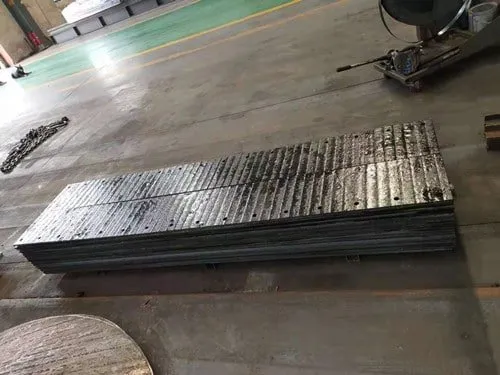
Industrial Wear Liner Plates are replaceable protective plates installed on equipment surfaces that experience wear during industrial operations. They act as a barrier between the equipment structure and abrasive materials, helping prevent premature damage to the underlying steel or machinery components. Depending on the application, liner plates may be manufactured from abrasion-resistant steel, alloy steel, chromium carbide overlay materials, or other specialized wear-resistant materials.
These plates are commonly installed inside chutes, hoppers, conveyors, crushers, bins, storage vessels, transfer points, and material-processing equipment. Their primary function is to resist wear caused by sliding abrasion, material impact, erosion, or a combination of these conditions. Some applications require high surface hardness, while others need a balance of hardness, toughness, and impact resistance.
Industrial wear liner plates can be supplied in standard or customized dimensions according to equipment requirements. Depending on the product design, installation may involve welding, bolting, countersunk fasteners, or other mechanical fixing methods. Proper selection and installation help ensure effective protection and simplify future maintenance.
The performance of industrial wear liner plates depends on the material grade, manufacturing process, plate thickness, surface hardness, toughness, and operating environment. Understanding these properties helps engineers select suitable liners for specific equipment and applications.
Industrial equipment that handles abrasive materials can experience rapid surface deterioration. Wear liner plates protect vulnerable areas by absorbing much of the wear that would otherwise affect the equipment structure. Replacing a liner when necessary can help preserve the underlying component and extend the overall service life of the equipment.
Frequent wear-related repairs can increase operating expenses and require additional maintenance resources. Industrial wear liner plates provide a replaceable protective surface that may reduce the need for extensive repairs to chutes, hoppers, conveyors, and other equipment. The actual cost benefit depends on the liner material, initial investment, installation requirements, and operating conditions.
Excessive wear can cause material leakage, reduced equipment efficiency, unexpected shutdowns, and damage to supporting structures. Correctly specified wear liner plates help protect critical surfaces and support predictable maintenance planning. Routine inspection remains important to identify worn areas before they affect equipment performance or safety.
Industrial wear liner plates are available in different material grades to address specific wear conditions. Abrasion-resistant steel may suit applications requiring a balance of hardness and toughness, while chromium carbide overlay plates are commonly considered for severe abrasive wear. Other materials may be appropriate for impact, erosion, elevated temperatures, or specialized process environments.
Many liner systems can be designed around existing equipment layouts, making them suitable for maintenance and refurbishment projects. Depending on the design, individual plates can be removed and replaced when they reach their wear limit. Correct dimensions, mounting arrangements, and installation procedures are essential for effective performance.
Mining operations handle abrasive materials such as iron ore, copper ore, coal, aggregates, and mineral concentrates. These materials can cause substantial wear in transfer chutes, hoppers, crushers, screens, conveyor systems, and processing equipment. Industrial wear liner plates help protect exposed surfaces and reduce wear-related maintenance. Material selection should consider particle size, material hardness, impact energy, and operating conditions.
Cement plants process limestone, clinker, gypsum, raw meal, and other abrasive materials throughout production. Wear liner plates are used in suitable chutes, hoppers, storage bins, transfer points, and material-handling systems. The selected liner should withstand the expected abrasion and temperature while remaining compatible with the equipment design and installation method.
Steel plants and metal-processing facilities handle raw materials, scrap, slag, and other industrial substances that can damage conventional steel surfaces. Wear liner plates help protect selected equipment areas from abrasion and impact during material transfer and processing. Where hot materials or severe impact are involved, the material grade and operating limits should be reviewed carefully.
Power plants often transport coal, ash, limestone, and other bulk materials through conveyors, hoppers, chutes, and storage systems. Industrial wear liner plates can help protect high-wear zones in these installations. Appropriate material selection can reduce premature wear and support more consistent operation under the plant's specific conditions.
Ports, warehouses, terminals, and industrial processing facilities rely on bulk material handling systems to transport large quantities of raw materials. Repeated material flow can gradually wear transfer points, conveyor chutes, and storage hoppers. Industrial wear liner plates provide a replaceable protective surface in these areas and can be specified according to the equipment geometry and expected wear rate.
Recycling facilities handle mixed materials, scrap, aggregates, and waste products that may cause abrasion, impact, and localized surface damage. Suitable wear liner plates can protect chutes, hoppers, sorting equipment, and other material-handling components. The selected liner should account for the varying composition of the process material and the type of wear expected.
|
Product Name |
Industrial Wear Liner Plates |
|---|---|
|
Product Type |
Industrial Wear-Resistant Liner Plates |
|
Material |
Abrasion-Resistant Steel, Alloy Steel, Chromium Carbide Overlay, Hardfacing Alloy, or Other Wear-Resistant Materials Depending on Product Type |
|
Manufacturing Process |
Depends on Material Grade and Plate Construction |
|
Hardness |
Grade-Dependent; Confirm with the Manufacturer's Technical Datasheet |
|
Thickness |
As per Product Availability and Customer Requirements |
|
Length and Width |
Standard or Custom Dimensions, Subject to Availability |
|
Surface Finish |
As Supplied or Specified for the Selected Product |
|
Wear Resistance |
Selected According to Abrasion, Impact, Erosion, and Operating Conditions |
|
Installation Method |
Welding, Bolting, or Mechanical Fixing Depending on Plate Design |
|
Customization |
Subject to Manufacturing Capability and Application Requirements |
|
Applications |
Mining, Cement, Steel Processing, Power Generation, Recycling, and Bulk Material Handling |
Selecting suitable industrial wear liner plates requires an assessment of the material being handled, the equipment design, and the operating conditions. A plate that performs well under sliding abrasion may not be the best choice for severe impact or high-temperature service. Reviewing the following factors helps identify a suitable wear protection solution.
Standard steel plates are suitable for many structural and fabrication applications, but they may wear rapidly when exposed to abrasive materials. Industrial wear liner plates are selected specifically to provide protection against defined wear mechanisms. Depending on their material and construction, they can offer improved abrasion resistance and help reduce the frequency of equipment repairs.
Abrasion-resistant steel liner plates provide wear resistance throughout the plate material, while overlay liner plates use a specialized wear-resistant layer over a supporting base. Hardfacing and composite products offer other combinations of surface protection and structural support. The most suitable option depends on the wear rate, impact conditions, fabrication requirements, available space, and overall maintenance strategy.
Product selection should be based on the equipment's actual operating conditions rather than hardness alone. Comparing technical datasheets, expected service life, installation requirements, and replacement costs can help determine the most economical solution over the equipment's operating life.
Regular inspection and proper maintenance help industrial wear liner plates provide effective protection throughout their service life. Inspection schedules should reflect the severity of the operating environment and the criticality of the equipment.
Hard-Tuff focuses on wear-resistant solutions for industrial applications where abrasion and material movement can affect equipment performance and maintenance costs. Choosing the right liner involves evaluating the process material, the type of wear, the equipment design, and the required service life.
When evaluating industrial wear liner plates, customers should confirm the material type, product dimensions, hardness, available configurations, technical documentation, and delivery requirements. Providing details about the equipment and operating conditions helps determine whether a specific wear-resistant plate is appropriate for the intended application.
Industrial Wear Liner Plates play an important role in protecting equipment exposed to abrasive materials and demanding operating conditions. Available in different materials and constructions, they help reduce surface wear, support equipment reliability, and simplify maintenance when properly selected and installed. Evaluating wear mechanisms, material properties, plate dimensions, and installation requirements is essential to achieving reliable performance. Contact Hard-Tuff to discuss the requirements for your industrial wear protection application.
