Overlay Welding Wear Plates are engineered wear-resistant plates designed to protect industrial equipment from abrasion, erosion, and material-related surface damage. They are manufactured by depositing a wear-resistant alloy onto a base plate through a welding or hardfacing process. This construction combines the strength and structural support of the base material with the wear resistance of the deposited overlay, making these plates suitable for demanding industrial environments.
Hard-Tuff provides wear-resistant product solutions for industries that require durable materials for handling abrasive substances and operating under challenging conditions. Overlay welding wear plates are commonly considered for mining, cement production, steel manufacturing, power generation, mineral processing, and bulk material handling. The appropriate plate depends on the type of wear, operating temperature, impact severity, base material, overlay composition, and equipment design.
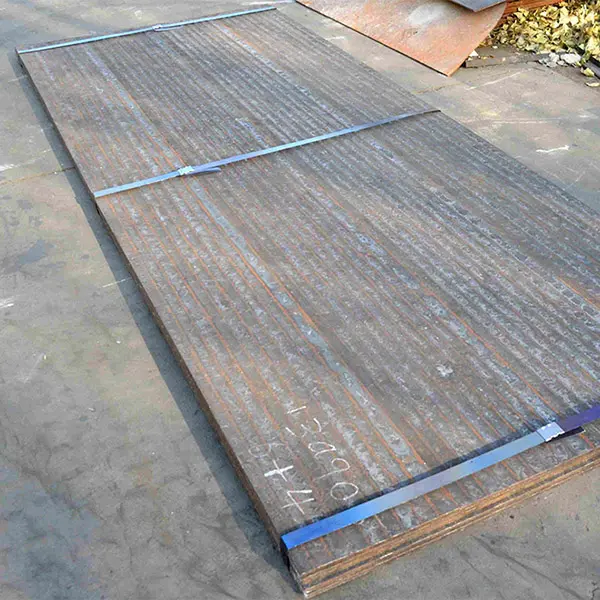
Overlay Welding Wear Plates, Overlay Welding Wear Plates Manufacturers, Overlay Welding Wear Plates Suppliers, Overlay Welding Wear Plates Stockists, Overlay Welding Wear Plates Exporters
Overlay Welding Wear Plates are composite wear-protection plates produced by welding a layer of abrasion-resistant alloy onto a supporting metal plate. The base plate provides structural strength, while the welded overlay forms a protective surface designed to withstand specific wear conditions. Depending on the application, the overlay may contain chromium-rich alloys, carbide-forming elements, or other wear-resistant alloy systems.
The welding process creates a metallurgically bonded layer that helps protect the underlying plate from material loss. These products are frequently used in locations where ordinary steel surfaces experience rapid wear from sliding particles, abrasive minerals, coal, limestone, clinker, and other industrial materials. The overlay composition and thickness can vary according to the manufacturing process and the intended service environment.
Overlay welding wear plates are different from solid wear-resistant alloy plates because their performance comes from the combination of a supporting substrate and a specialized surface layer. This construction can provide an economical wear-protection solution by concentrating the wear-resistant material where it is most needed.
Overlay welding wear plates are selected according to their ability to resist material loss while maintaining the structural integrity required for industrial service. Their properties depend on the base metal, overlay alloy, welding procedure, dilution, deposit thickness, and final surface condition.
One of the main benefits of overlay welding wear plates is their ability to protect equipment surfaces exposed to continuous abrasion. The wear-resistant layer is designed to withstand contact with hard particles and abrasive materials that can gradually remove ordinary steel. Selecting the correct overlay composition helps improve performance under the specific wear mechanism encountered in the application.
Overlay welding wear plates use a supporting base material with a specialized wear-resistant surface. This construction can reduce the need to manufacture an entire component from an expensive wear-resistant alloy. By protecting high-wear areas, the plates may help lower maintenance expenses and reduce the frequency of component replacement. Actual cost savings depend on product price, installation costs, service conditions, and replacement intervals.
Severe wear can affect equipment dimensions, material flow, and operational efficiency. In some situations, excessive wear can lead to unplanned shutdowns and costly repairs. Properly selected overlay welding wear plates help protect vulnerable surfaces and support more predictable maintenance planning. Routine inspections are still necessary to identify overlay wear, cracking, or damage before it affects equipment operation.
These plates are used in demanding environments where abrasive materials move through processing and conveying equipment. Depending on the alloy and construction, they can provide protection against different levels of abrasion and selected impact conditions. Applications involving severe impact, elevated temperatures, or cyclic loading require careful assessment because maximum hardness does not always provide the best overall performance.
Overlay welding wear plates may be available in different thicknesses, dimensions, overlay compositions, and configurations. Custom cutting and fabrication can help accommodate equipment layouts, mounting arrangements, and specific wear zones. Availability depends on the manufacturer's capabilities, the selected product, and the technical requirements of the application.
Overlay Welding Wear Plates in India, Overlay Welding Wear Plates Manufacturers in India, Overlay Welding Wear Plates Suppliers in India, Overlay Welding Wear Plates Stockists in India, Overlay Welding Wear Plates Exporters in India
Mining facilities handle abrasive materials such as iron ore, copper ore, coal, and mineral concentrates. These materials can cause rapid wear in transfer chutes, hoppers, conveyor systems, screening equipment, and processing installations. Overlay welding wear plates can help protect exposed surfaces and reduce material loss. The required overlay should be selected according to particle size, impact severity, material flow, and expected operating life.
Cement plants process limestone, clinker, gypsum, raw meal, and other abrasive materials throughout production. Wear-resistant overlay plates may be used in chutes, hoppers, transfer points, and selected processing equipment. The correct material selection should account for abrasion intensity, temperature, equipment geometry, and the method used to attach the plates.
Steel plants and metal-processing facilities operate equipment that handles raw materials, scrap, slag, and other industrial substances. Overlay welding wear plates can provide protection in material-handling areas where abrasion reduces the life of conventional steel components. In applications involving hot materials or significant impact, the alloy composition and operating temperature limits should be reviewed carefully.
Power generation facilities may handle coal, ash, limestone, and other bulk materials that cause abrasion during transport and processing. Overlay welding wear plates can be installed in suitable chutes, hoppers, conveyor transfer points, and related equipment. Proper material selection can help minimize wear-related maintenance and support reliable material handling.
Ports, terminals, warehouses, and industrial processing facilities often use conveyors and transfer systems to move large quantities of abrasive materials. The continuous movement of these materials can damage equipment surfaces over time. Overlay welding wear plates help protect selected high-wear zones and may be customized to suit the shape and dimensions of the equipment.
Recycling plants and waste-processing facilities handle mixed materials that can cause abrasion and localized impact. Depending on the equipment and waste stream, overlay welding wear plates may be suitable for selected chutes, hoppers, material guides, and other exposed surfaces. The plate design should account for the combination of abrasion, impact, and possible contamination in the process material.
Specifications vary according to the base material, overlay alloy, welding process, deposit thickness, and intended application. The following table outlines common specification categories. Actual hardness, chemical composition, dimensions, and performance values should be confirmed with the manufacturer's technical documentation for the selected grade.
|
Product Name |
Overlay Welding Wear Plates |
|---|---|
|
Product Type |
Welded Wear-Resistant Overlay Plate |
|
Base Material |
Steel Base Plate as per Product Design and Customer Requirements |
|
Overlay Material |
Chromium-Rich Alloy, Carbide-Containing Alloy, or Other Wear-Resistant Weld Deposit, Depending on Grade |
|
Manufacturing Process |
Welding or Hardfacing Deposition Process |
|
Hardness |
Depends on Overlay Composition and Product Grade; Confirm with the Technical Datasheet |
|
Overlay Thickness |
As per Selected Grade, Manufacturing Capability, and Application Requirements |
|
Total Plate Thickness |
As per Product Availability and Customer Requirements |
|
Length and Width |
Standard or Custom Dimensions, Subject to Availability |
|
Surface Finish |
As Supplied or Specified for the Selected Product |
|
Wear Resistance |
Designed for Abrasion and Other Wear Conditions According to the Selected Overlay |
|
Fabrication |
Cutting, Shaping, and Machining as Permitted by the Product Design and Manufacturer's Recommendations |
|
Installation Method |
Welding, Bolting, or Mechanical Fixing as Appropriate for the Product and Equipment |
|
Applications |
Mining, Cement, Steel Manufacturing, Power Generation, Recycling, and Bulk Material Handling |
Choosing the right overlay welding wear plate requires a clear understanding of the equipment's operating environment and the type of damage that needs to be controlled. A plate designed primarily for sliding abrasion may not perform optimally in an application involving heavy impact or high temperatures. Reviewing the following factors can help identify a suitable product.
Overlay welding wear plates are one of several options available for protecting industrial equipment against abrasion. Other common choices include abrasion-resistant steel plates, chromium carbide overlay plates, and solid carbide components. Each option offers different benefits depending on the severity of wear, fabrication requirements, impact exposure, and budget.
Abrasion-resistant steel plates provide a through-thickness wear-resistant material and may be appropriate where a balance of hardness and toughness is required. Chromium carbide overlay plates use a hardfacing layer containing chromium carbides and are commonly selected for severe abrasive service. Overlay welding wear plates may use different deposited alloy systems, so their exact performance depends on the selected composition and manufacturing method.
When comparing products, evaluate the expected service life, base material strength, overlay properties, operating temperature, installation method, repair options, and total lifecycle cost. Product descriptions alone are not sufficient to establish equivalent performance; technical datasheets and application-specific assessments should guide the final selection.
Regular inspection and suitable maintenance practices help ensure that overlay welding wear plates continue to protect industrial equipment effectively. Inspection intervals should be based on operating severity, equipment criticality, and the manufacturer's recommendations.
Hard-Tuff focuses on wear-resistant solutions for industrial environments where abrasion can affect equipment performance, maintenance schedules, and operating costs. Selecting a suitable wear plate requires attention to the material being processed, the severity of wear, the equipment design, and the required service life.
When sourcing overlay welding wear plates, customers should confirm product construction, overlay composition, hardness, available dimensions, technical documentation, and delivery requirements. Sharing the intended application and operating conditions helps determine whether a particular wear-resistant plate is suitable for the job.
Overlay Welding Wear Plates in Mumbai, Overlay Welding Wear Plates Manufacturers in Mumbai, Overlay Welding Wear Plates Suppliers in Mumbai, Overlay Welding Wear Plates Stockists in Mumbai, Overlay Welding Wear Plates Exporters in Mumbai
Overlay Welding Wear Plates provide a practical wear-protection solution for industrial equipment exposed to abrasion and demanding material-handling conditions. Their combination of a supporting base plate and a wear-resistant welded overlay can help extend component life and reduce maintenance requirements when the product is correctly selected. Evaluating the wear mechanism, overlay composition, plate dimensions, operating temperature, and installation method is essential to achieving reliable performance. Contact Hard-Tuff to discuss the technical requirements for your application.
Overlay Welding Wear Plates, Overlay Welding Wear Plates Manufacturers, Fe-Cr-C Overlay Plates Suppliers, Fe-Cr-C Overlay Plates Stockists, Fe-Cr-C Overlay Plates Exporters, Fe-Cr-C Overlay Plates in India, Fe-Cr-C Overlay Plates Price, Fe-Cr-C Overlay Plates Specifications, Fe-Cr-C Overlay Plates Applications, What Are Fe-Cr-C Overlay Plates, What Are Fe-Cr-C Overlay Plates Used For, Tungsten Fe-Cr-C Overlay Plates, Chromium Fe-Cr-C Overlay Plates, Industrial Fe-Cr-C Overlay Plates, Carbide Wear Plate Hardness, Carbide Wear Plate Thickness, Carbide Wear Plate Benefits, Carbide Wear Plate Uses, Wear Resistant Plates, Abrasion Resistant Plates, Chromium Carbide Overlay Plates, CCO Wear Plates, Hardfacing Plates, Composite Wear Plates, Mining Wear Plates, Cement Plant Wear Plates, Industrial Wear Liners, Heavy Duty Wear Plates, Fe-Cr-C Overlay Plates Suppliers in India, Difference Between Fe-Cr-C Overlay Plates and Hardfacing Plates
