Pipe Liner CCO, also known as Chromium Carbide Overlay Pipe Liner, is a wear-resistant lining solution designed to protect pipes and material-handling systems from severe abrasion. These liners typically feature a steel base with a chromium carbide-rich hardfacing layer deposited on the surface. This construction combines the structural strength of steel with the abrasion resistance of a hard overlay, making Pipe Liner CCO suitable for demanding industrial environments.
Hard-Tuff provides wear-resistant product solutions for industries where abrasive materials can cause premature pipe wear, leakage, maintenance interruptions, and equipment damage. Pipe Liner CCO is commonly considered for mining, mineral processing, cement production, power generation, slurry transportation, and bulk material handling. The appropriate liner depends on the conveyed material, flow velocity, particle characteristics, operating temperature, pipe dimensions, and installation requirements.
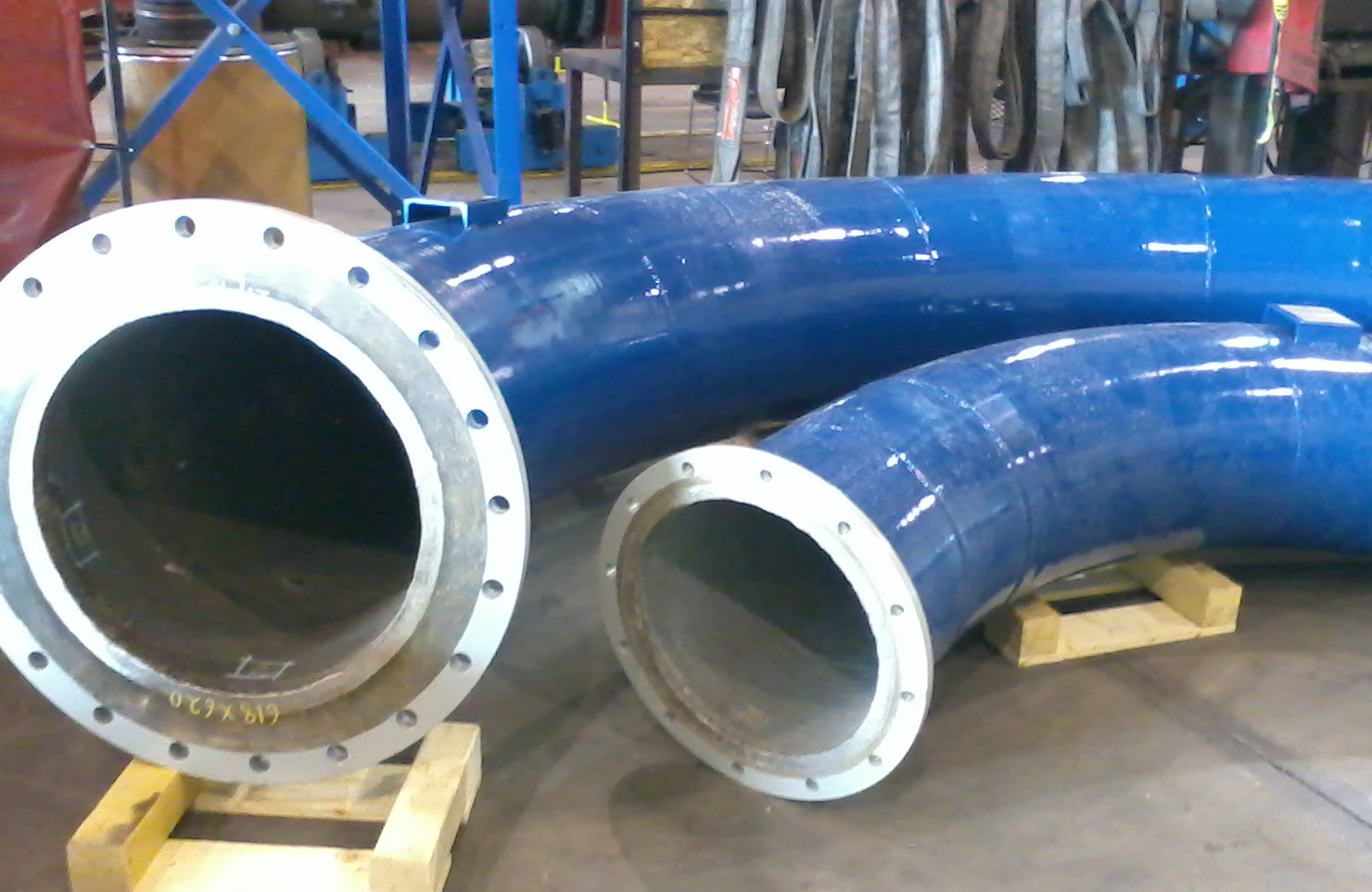
Pipe Liner CCO is a protective lining made using chromium carbide overlay technology. CCO refers to Chromium Carbide Overlay, a wear-resistant material system in which a hardfacing alloy containing chromium carbides is deposited onto a steel substrate. The resulting surface is designed to resist abrasive wear caused by hard particles moving through industrial pipelines and related equipment.
Industrial pipes carrying ore, coal, sand, mineral concentrates, cement raw materials, and abrasive slurries can experience substantial internal wear. Conventional steel pipes may gradually lose wall thickness when exposed to continuous particle movement. A suitable CCO liner helps protect the pipe's internal surface and can extend the service life of the lined component under appropriate operating conditions.
Pipe liner designs vary according to the application. CCO material may be manufactured as a lined pipe, a curved liner segment, or a plate that is formed or installed inside a pipe or chute. Product construction, overlay thickness, pipe diameter, and installation method should be confirmed with the manufacturer before specifying a solution.
Pipe Liner CCO is selected primarily for its abrasion-resistant surface and suitability for applications involving continuous material flow. Its performance depends on the overlay composition, manufacturing process, substrate, deposit thickness, and actual operating conditions.
The primary advantage of Pipe Liner CCO is its ability to protect internal surfaces exposed to abrasive materials. When a pipeline transports minerals, slurry, coal, sand, or similar substances, particles can gradually wear away the pipe wall. The chromium carbide overlay provides a hard working surface that helps resist this material loss. Actual performance depends on particle size, velocity, concentration, flow pattern, and the selected liner construction.
Internal pipe wear can eventually reduce wall thickness and affect pipeline reliability. A suitable CCO liner provides an additional wear-resistant surface that may extend the service life of the protected component. This can be particularly valuable in installations where pipe replacement requires extensive labour, equipment shutdowns, or difficult access.
Replacing worn pipeline sections can involve significant maintenance effort, especially in large industrial facilities. Properly specified CCO liners can help reduce the frequency of wear-related repairs and component replacement. Maintenance savings depend on the operating environment, initial installation cost, liner performance, and inspection schedule.
CCO pipe liners are designed for applications in which abrasion is a major concern. They may be suitable for selected systems transporting abrasive slurry, mineral particles, coal, cement materials, and other solids. Where the application also involves severe impact, corrosion, or elevated temperatures, the full operating conditions should be reviewed before selecting a liner.
Wear is not always distributed evenly throughout a pipeline. Bends, elbows, reducers, transfer points, and changes in flow direction may experience concentrated wear. CCO liners can be considered for these locations when their geometry and material characteristics are suitable. A wear assessment can help identify the most critical sections and determine where additional protection is required.
Pipe Liner CCO, Pipe Liner CCO Manufacturers, Pipe Liner CCO Suppliers, Pipe Liner CCO Stockists, Pipe Liner CCO Exporters
Mining and mineral processing facilities frequently transport iron ore, copper ore, coal, mineral concentrates, and abrasive slurry through industrial pipelines. The movement of hard particles can cause significant internal pipe wear, particularly at bends and areas where flow direction changes. Pipe Liner CCO can help protect selected pipeline sections and material transfer components against abrasion. The liner should be selected according to particle characteristics, flow velocity, slurry concentration, and expected impact conditions.
Cement plants handle raw meal, clinker, limestone, gypsum, and other abrasive materials throughout production. Depending on the conveying system, CCO liners may be used in suitable transfer pipes, pneumatic or gravity material-handling sections, chutes, and related equipment. Temperature, material velocity, and the specific conveying method should be evaluated to ensure that the selected liner is suitable for the service environment.
Power generation facilities may transport coal, ash, limestone, and other process materials through pipelines and handling systems. These materials can cause abrasion during continuous operation. CCO liners can be considered for suitable pipe sections and transfer components where abrasion resistance is required. The operating temperature, material characteristics, and any corrosion concerns should be assessed before installation.
Slurry pipelines transport mixtures of liquids and solid particles between processing areas, storage facilities, and disposal or treatment locations. Depending on the solids content and particle hardness, the internal pipe surface may experience continuous abrasive wear. Pipe Liner CCO may be suitable for selected slurry applications when its material properties, liner design, and attachment method are compatible with the operating conditions.
Steel plants and metal-processing facilities use material-handling systems to transport scale, slag-related materials, mineral feedstock, and other industrial substances. Where abrasive solids cause internal wear, suitable CCO liners can help protect vulnerable components. Applications involving corrosive media, high temperatures, or significant impact require additional material compatibility checks.
Ports, industrial terminals, warehouses, and processing plants often use pipes, chutes, and transfer systems to move bulk materials. Repeated material contact can wear conventional steel surfaces over time. Pipe Liner CCO can provide abrasion protection in suitable transfer sections, helping reduce wear-related interruptions and maintenance requirements.
Pipe Liner CCO specifications depend on the base steel, chromium carbide overlay composition, manufacturing method, liner geometry, and application. The following table outlines common specification categories. Exact dimensions, hardness, chemical composition, and performance values should be verified against the technical datasheet for the selected product.
|
Product Name |
Pipe Liner CCO |
|---|---|
|
Full Form |
Chromium Carbide Overlay Pipe Liner |
|
Product Type |
Abrasion-Resistant Pipe Liner |
|
Base Material |
Steel Substrate as per Product Design |
|
Overlay Material |
Chromium Carbide-Rich Hardfacing Alloy |
|
Manufacturing Process |
Weld Overlay or Hardfacing Deposition Process |
|
Hardness |
Grade-Dependent; Confirm with the Manufacturer's Technical Datasheet |
|
Overlay Thickness |
As per Product Design and Application Requirements |
|
Overall Thickness |
As per Selected Product and Customer Requirements |
|
Pipe Diameter |
As per Application, Liner Configuration, and Availability |
|
Length |
Standard or Custom Lengths, Subject to Availability |
|
Liner Configuration |
Straight Sections, Curved Segments, or Other Available Configurations |
|
Wear Resistance |
Designed Primarily for Abrasive Wear; Suitability Depends on Operating Conditions |
|
Installation Method |
As Recommended for the Selected Liner Design and Pipeline Configuration |
|
Applications |
Mining, Mineral Processing, Cement, Power Generation, Slurry Transportation, and Bulk Material Handling |
|
Customization |
Subject to Technical Requirements, Product Design, and Manufacturing Capability |
Choosing the correct Pipe Liner CCO requires an understanding of the material being conveyed, the pipeline layout, and the operating conditions. The highest-hardness product is not automatically the best choice for every application. A suitable liner must balance abrasion resistance, impact tolerance, structural requirements, installation constraints, and expected service life.
Conventional pipe liners may be manufactured from steel, rubber, polymers, ceramics, or other materials depending on the application. Each material offers different characteristics related to abrasion, impact, corrosion, temperature resistance, flexibility, and installation. Pipe Liner CCO uses a chromium carbide-rich hardfacing surface supported by a steel substrate and is generally considered where abrasion is a major concern.
Rubber liners may be suitable for certain applications involving impact and slurry handling, while polymer liners can offer useful chemical or flow-related properties under appropriate conditions. Ceramic liners may provide high abrasion resistance in selected systems but require careful consideration of impact and installation. Conventional steel liners can be easier to fabricate in some situations but may wear more quickly under severe abrasion.
The correct choice depends on the actual service conditions rather than material hardness alone. Compare expected wear rate, impact exposure, corrosion potential, operating temperature, installation cost, maintenance access, and total lifecycle cost before choosing a pipe lining system.
Regular inspection helps determine whether a Pipe Liner CCO is performing as intended and whether maintenance or replacement is required. Inspection intervals should be based on operating severity, pipeline criticality, manufacturer recommendations, and the consequences of liner failure.
Hard-Tuff focuses on wear-resistant solutions for industrial environments where abrasion can affect pipeline reliability, maintenance schedules, and operating costs. Selecting a suitable CCO liner requires consideration of the conveyed material, pipeline geometry, wear severity, installation method, and expected service life.
Before ordering Pipe Liner CCO, confirm the available liner configuration, overlay thickness, hardness, base material, dimensions, and technical documentation. Providing details about the pipeline application and operating conditions helps establish whether a particular liner is appropriate for the intended service.
Pipe Liner CCO is a wear-protection solution designed for pipeline systems exposed to abrasive materials. Its chromium carbide-rich overlay and steel substrate can help reduce internal wear and extend component service life in suitable applications. Correct selection requires careful evaluation of the conveyed material, pipeline geometry, operating conditions, liner dimensions, and installation requirements. Contact Hard-Tuff to discuss your Pipe Liner CCO requirements and confirm the technical specifications suitable for your application.
