Sand Slurry Wear Plates are wear-resistant materials designed to protect industrial equipment exposed to abrasive sand, mineral particles, slurry mixtures, and continuous material flow. These plates are used in applications where solid particles suspended in water or other liquids can gradually erode metal surfaces. Depending on their construction, sand slurry wear plates may provide resistance to abrasion, erosion, and selected impact conditions, helping improve equipment reliability and service life.
Industries such as mining, mineral processing, dredging, sand washing, cement production, and wastewater treatment often handle abrasive slurry mixtures. Pumps, pipelines, chutes, hoppers, tanks, and processing equipment can experience significant wear when exposed to these materials. Selecting suitable wear plates helps protect vulnerable surfaces, reduce maintenance requirements, and support continuous industrial operations.
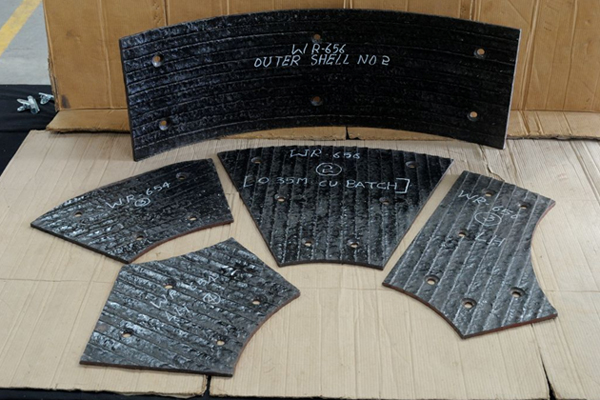
Sand Slurry Wear Plates, Sand Slurry Wear Plates Manufacturers, Sand Slurry Wear Plates Suppliers, Sand Slurry Wear Plates Stockists, Sand Slurry Wear Plates Exporters
Hard-Tuff focuses on industrial wear-resistant solutions for demanding operating environments. The selection of Sand Slurry Wear Plates depends on slurry composition, particle size, flow velocity, solids concentration, operating temperature, pressure, and the type of wear occurring in the equipment. Evaluating these conditions helps determine the appropriate material and plate construction for the intended application.
Sand Slurry Wear Plates are protective plates or liners designed for equipment that handles mixtures of liquid and abrasive solid particles. Sand slurry commonly contains water mixed with sand, silt, minerals, or other solid materials. As this mixture moves through processing systems, the particles can strike, scrape, and erode equipment surfaces.
Depending on the operating environment, wear plates may be manufactured from abrasion-resistant steel, wear-resistant alloys, rubber-lined systems, ceramic-lined composites, or steel plates with hardfacing overlays. Each material offers different performance characteristics. For example, metallic plates may be suitable for certain combinations of abrasion and impact, while ceramic or rubber-based liners may be preferred in specific erosion or slurry-handling conditions.
The most suitable design depends on the slurry's physical characteristics and the equipment's operating requirements. Factors such as particle hardness, particle shape, slurry velocity, pH, temperature, and impact angle can significantly influence wear performance. A product should therefore be selected based on the actual service environment rather than its product name alone.
Sand slurry wear plates are selected for their ability to resist material loss in environments where liquid flow and abrasive particles interact with equipment surfaces. Their performance depends on the material grade, surface hardness, toughness, construction, and operating conditions.
Sand Slurry Wear Plates in India, Sand Slurry Wear Plates Manufacturers in India, Sand Slurry Wear Plates Suppliers in India, Sand Slurry Wear Plates Stockists in India, Sand Slurry Wear Plates Exporters in India
Sand and mineral particles can gradually remove material from equipment surfaces as slurry passes through a processing system. Wear-resistant plates provide a protective barrier that can reduce this damage when the material is correctly selected. The expected benefit depends on particle characteristics, slurry velocity, flow direction, and the composition of the selected liner.
Equipment components exposed to abrasive slurry may require frequent repair or replacement if they are not adequately protected. Suitable wear plates can reduce direct exposure of the underlying equipment to abrasive particles. This can help extend component life and support more predictable maintenance planning, although actual service life varies with operating conditions and installation quality.
Replacing a wear liner can be less expensive than repairing or replacing a complete pump housing, chute, tank, pipeline section, or processing component. Properly selected Sand Slurry Wear Plates can help reduce unplanned maintenance and associated production interruptions. Total cost savings depend on initial material costs, installation expenses, inspection frequency, and the service life achieved.
Wear-related equipment failures can interrupt slurry transportation and processing. Protective liners help manage wear in high-exposure areas and can support reliable operation when incorporated into an appropriate maintenance programme. Regular inspections are necessary to identify excessive wear, liner damage, loose attachments, or possible leakage before these issues affect production.
Different slurry applications require different combinations of abrasion resistance, erosion resistance, toughness, corrosion resistance, and flexibility. Wear protection may involve metallic plates, ceramic liners, elastomeric liners, or composite constructions. Choosing the right option allows the wear protection system to be matched to the material being transported and the equipment's operating conditions.
Mining operations transport abrasive mixtures containing water, sand, ore particles, and mineral concentrates. Slurry-handling equipment such as chutes, tanks, pipelines, pump systems, and processing vessels may experience continuous abrasion and erosion. Suitable wear plates or liners can help protect high-wear areas and reduce the frequency of component replacement. Material selection should account for particle hardness, slurry velocity, solids concentration, and impact severity.
Sand washing plants use water to separate, clean, and transport sand and fine mineral particles. The continuous movement of abrasive mixtures can cause wear in launders, hoppers, chutes, tanks, and other material-handling components. Wear-resistant plates and liners can help protect these surfaces and support consistent plant operation. The selected liner should be compatible with the equipment design and the expected slurry flow conditions.
Dredging equipment transports mixtures of sand, silt, gravel, and water from underwater locations. Suction systems, discharge pipelines, hoppers, and slurry-handling components may experience significant abrasion as the mixture moves through the system. Appropriate wear protection can help reduce material loss in selected areas. Where seawater or chemically aggressive conditions are present, corrosion resistance should also be evaluated.
Cement plants and construction-material processing facilities may handle sand, mineral fines, aggregates, and slurry mixtures in selected production processes. Wear-resistant plates can be used in suitable chutes, hoppers, transfer points, and material-handling systems. The choice of plate should consider the abrasiveness of the material, operating temperature, moisture levels, and the type of equipment being protected.
Some power generation and industrial processing facilities use slurry systems to move ash, minerals, and other suspended solids. These materials can cause erosion and abrasion in selected tanks, channels, pipelines, and transfer equipment. Wear protection should be selected according to the particle characteristics, temperature, flow conditions, and chemical composition of the slurry.
Wastewater treatment and industrial waste-handling systems may transport slurries containing grit, sand, sediment, and suspended solids. Suitable wear-resistant materials can help protect selected channels, hoppers, tanks, and equipment surfaces. In these environments, chemical compatibility and corrosion resistance may be as important as abrasion resistance, depending on the composition of the process fluid.
Sand slurry wear plate specifications vary according to the material, plate construction, slurry composition, and intended application. The following table lists general specification categories. Actual material grades, hardness values, dimensions, and performance limits should be confirmed using the manufacturer's technical documentation.
Ash handling wear plate specifications vary according to the material grade, plate construction, operating temperature, and intended application. The following table outlines general specification categories. Exact values, including hardness, chemical composition, thickness, and dimensional tolerances, should be confirmed using the technical datasheet for the selected product.
|
Product Name |
Sand Slurry Wear Plates |
|---|---|
|
Product Type |
Wear-Resistant Plates or Liners for Sand and Slurry Handling Equipment |
|
Material Options |
Abrasion-Resistant Steel, Wear-Resistant Alloys, Hardfacing Overlays, Ceramic Liners, Rubber Liners, or Composite Constructions, Depending on Application |
|
Base Material |
As Per Selected Product Construction |
|
Surface Layer |
As Per Selected Material, Lining System, and Application Requirements |
|
Hardness |
Depends on Material Grade and Construction; Confirm with the Manufacturer's Technical Datasheet |
|
Thickness |
As Per Product Availability, Equipment Design, and Customer Requirements |
|
Length and Width |
Standard or Custom Dimensions, Subject to Product Type and Availability |
|
Wear Resistance |
Selected According to Abrasion, Erosion, and Impact Conditions |
|
Corrosion Resistance |
Depends on Material Composition and Slurry Chemistry |
|
Operating Temperature |
Within the Limits of the Selected Material and Lining System |
|
Manufacturing Process |
Depends on Product Type; May Include Steel Processing, Hardfacing, Cladding, Moulding, or Lining Application |
|
Installation Method |
Welding, Bolting, Mechanical Fixing, Bonding, or Other Approved Methods Depending on Construction |
|
Applications |
Mining, Sand Washing, Dredging, Mineral Processing, Cement Production, and Slurry Handling |
|
Customization |
Subject to Product Design, Manufacturing Capability, and Customer Requirements |
Selecting suitable Sand Slurry Wear Plates requires an understanding of the slurry characteristics and the operating conditions of the equipment. A material that performs well in one slurry system may not be suitable for another because particle size, velocity, chemistry, and impact conditions can differ significantly.
Standard steel plates may be suitable for applications with moderate wear and operating conditions that fall within the material's capabilities. However, when sand and abrasive particles move continuously through a system, ordinary steel surfaces may experience rapid material loss. Sand slurry wear plates use materials or protective layers selected to improve resistance to the specific wear mechanisms present in the application.
Wear-resistant steel plates can be useful where a combination of hardness and toughness is required. Hardfacing plates may be suitable for selected severe-abrasion conditions, while ceramic or elastomeric liners can offer advantages in particular erosion, impact, or slurry-handling applications. No single material is ideal for every slurry system.
The correct selection should be based on slurry characteristics, operating velocity, impact severity, chemical exposure, installation constraints, and total lifecycle cost. Technical recommendations and application data can help identify the most suitable wear protection for a specific system.
Regular inspection helps ensure that Sand Slurry Wear Plates continue to provide effective protection. Inspection frequency should reflect operating severity, equipment criticality, and the manufacturer's recommendations.
Hard-Tuff focuses on industrial wear-resistant solutions for applications where abrasion and material erosion can affect equipment reliability and maintenance costs. Choosing a suitable wear plate requires careful consideration of slurry composition, flow conditions, equipment design, and expected service life.
When evaluating Sand Slurry Wear Plates, customers should confirm material construction, available dimensions, technical specifications, installation requirements, and compatibility with the intended operating environment. Providing details about the slurry, equipment type, and operating conditions can help determine which wear-resistant solution may be suitable.
Sand Slurry Wear Plates help protect industrial equipment exposed to abrasive mixtures of sand, minerals, and liquids. Depending on their construction, they can improve resistance to abrasion and erosion, reduce maintenance frequency, and support reliable material handling. Choosing the right solution requires evaluating slurry composition, particle size, flow velocity, impact severity, corrosion risk, and installation requirements. Contact Hard-Tuff to discuss your application and determine suitable wear protection options.
